December 8th, 2008
The rib design is evolving nicely. The big advances are coming from the inner cell interfaces. Last Wednesday we had one of the ribs up to 1.6 psi. At this pressure the rib was able to support a 44 pound end load without distorting the ellipse. This is about what we need. Now the task is to get the rib to handle double that to give us a safety margin.
On Saturday we made two new inner cells and completed the third version of the cell interface. We’ve discovered that the techniques used to put the inner cell into the outer shell have a huge impact on the pressure that can be reached.
After a long day we were beginning to show real results. At 9pm we went for a full pressure load with all the bells and whistles in place. At 1.7 psi we began hearing loud bangs as banding threads started popping. The banding threads were an idea we tried that didn’t workout so apart from startling us it didn’t matter. We closed all the valves and everything was holding. Back on with the compressor. At 1.92 psi there was a huge pop, a blast of air then just the sound of the compressor. A three foot section of the outer shell had blow out.
These first test rib outer shells have been simple single seamed creatures. They’ve gone as far as they can go. Now it’s time to build a true double balloon seam and load tape ribs. Although we may do a patch and add some load bands to the existing pair of ribs just to see how high they’ll go. That will give us a better handle on failure modes.


The first and third cell interface.


Posted in Uncategorized | Comments Closed
December 3rd, 2008
With each test the rib changes. We’ve gone from multiple side access panels to drawstring end closures, narrowed the diameter of the inner cell, increased the overall ellipse circumference and a dozen other modifications. For the rib to act as an airbeam we need to get it to 2 psi. Now for the rocket guys that may sound like no pressure at all. For the balloon folks that is a huge number. The current configurations have gotten us just over 1 psi. Still a long, long way to go.
In the last couple of days we’ve been building ridged end caps and a new fill and gauge interface. We’ll be reaching for the magic 2 psi tonight.
Here’s some images from last Saturdays work session:


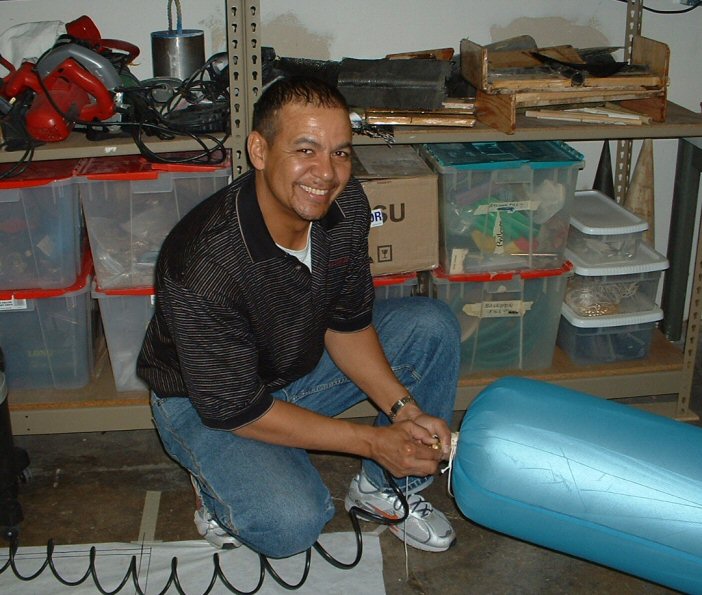
Paul and Emmett working on a rib.
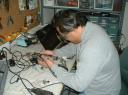

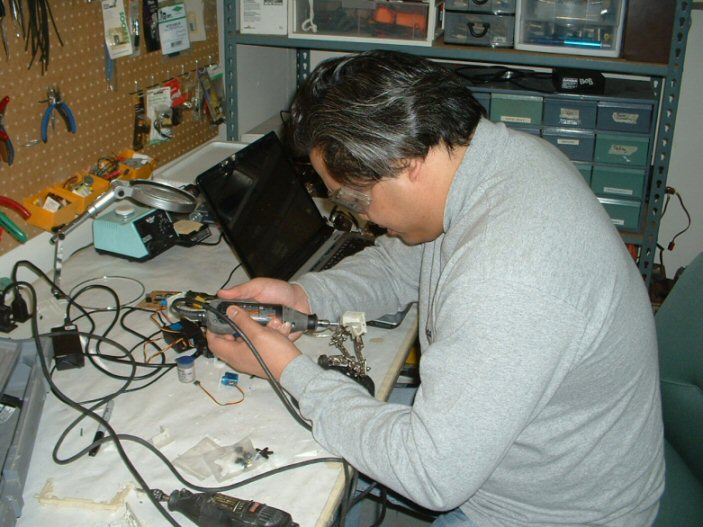
Bob and Anthony working on the reel.
Posted in Uncategorized | 6 Comments »
November 26th, 2008
Posted in Uncategorized | Comments Closed
November 24th, 2008
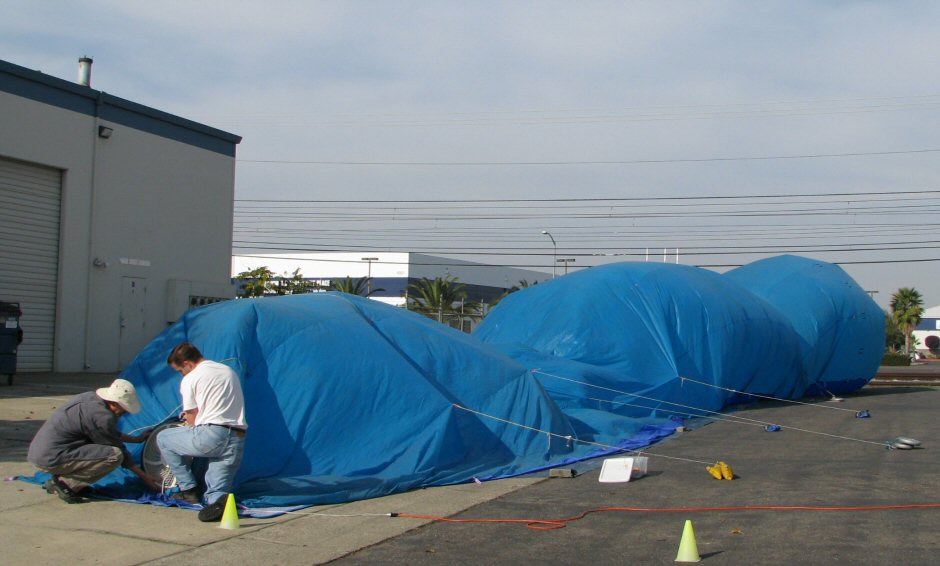
Last weekend we again had one of the Ascender 100 arms inflated in the parking lot. We were going to test both the original rib that had been extended and a new rib. During the initial inflation there was a POP! The inner cell of the original rib burst. We continued with the tests of the new rib. This rib design was significantly better that the first one. The test also pointed out a number of flaws in the design we well as a couple of operational problems. No problem through, that is what the test was for. The next generation of rib is being designed. I suspect we’ll need eight to nine generation to really hone it in. We’re also working on new filling gear with new low pressure gauges. We need also to monitor the ambient pressure inside the main envelope in addition to pressure inside the rib. It’s way too easy to over pressure the outer envelope and creating forces to great for the rib to overcome.
The team really put in a hard days work on this one.
Here’s some pics from the Wednesday night build session before the test:
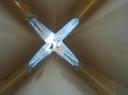

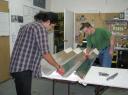
Inside the launch box after we finished foil lining the foam.

The modified original rib.
Posted in Uncategorized | Comments Closed
November 20th, 2008
This is from the size check of the test rib two weeks ago. We just finished the second test rib. If it doesn’t rain we’ll be checking it’s fit this coming weekend.
[wp_youtube]mpfMQCjPcFI[/wp_youtube]
Posted in Uncategorized | 6 Comments »
November 18th, 2008
A group of engineering students from California State University Sacramento lead by our own K’John are managing the Away 28 upgrade project. They’re in the process of an end to end structural analysis of the vehicle. Yesterday they prepared a segment of carbon tubing for load testing. The challenge is putting on mounting rings that are stronger than the tube so it can be mounted in the testing machine.


Original Away 28
Posted in Uncategorized | Comments Closed
November 16th, 2008
We been changing to new frequencies on our telemetry systems. One of the results is that we no longer need the big “double boomer” phased antennas. We still use one of the single long antennas. The single antenna stand doesn’t need to be as beefy a stand as the double does. The old stand could hold two antennas in high winds without a problem but it came with a price. It takes two people thirty minutes to assemble each one of them in the field. They’re so complicated that we always have an antenna assemble training session before each mission.
Saturday the team took one of the dish antenna stands and modified it for single long antenna use. It came out fantastic. The new stand only takes five minutes to setup. Not only will the new stand save us gobs of time in the field, but it’s much easier to pack and has a much smaller part count.
 Ed, Emmett and the new stand.
 The old stand.
Work continues on the refurbishing the rocket launch box. Saturday the two layers of foil were glued to the inside surfaces. The foil protects the foam from catching fire from the rocket’s blast. We’re be using this box for a systems test flight. The rocket will be there but not launched. However the foil changes the radio environment of the box. It needs to be there so the test will be accurate.
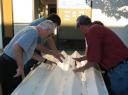 Foiling the box interior.
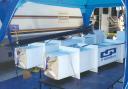
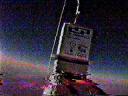
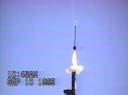
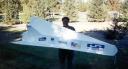
Here are some older pics of launch boxes:
Posted in Uncategorized | Comments Closed






 The JPA Store