I’ve have these three ancient CDs of pictures in the back of my desk literally from about a decade ago. They’ve been sitting because they’re photo CDs in a weird old Kodak format that nothing can read anymore. Today I tracked down the right driver on the web and extracted the pics. Some I had copies of, but most hadn’t been seen in a long time.
I’ve pulled together a few of the “Rockoon”, (balloon launch rocket) flights. These are our early experiment. Most of these pictures show the various launch boxes, the container that holds and launched the rocket. Next year we’ll be lofting our fourteenth generation rocket designed for balloon launch.


The first rocket was only 14 inches long.


This was a five foot rocket. It started out well, but had a problem at ignition.
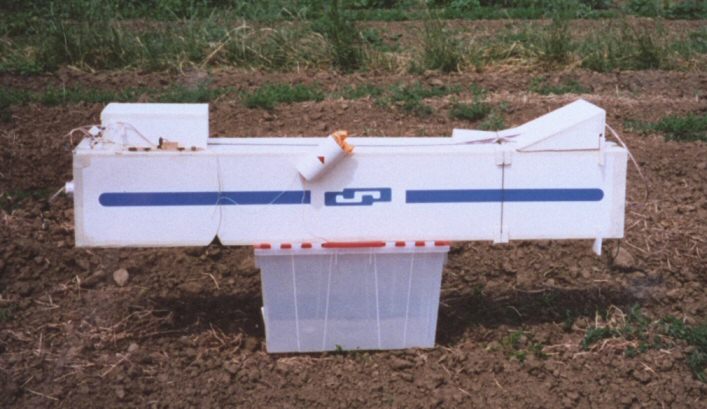

Rockoon three’s launch box. Three Running.


Rockoon five’s launch box. Five heading for the stars.


Rockoon 6 launch box and under balloons.

Number seven be carried out to the balloons.
For more pics and info see our Rockoon Page.
I don’t know why NASA doesn’t use lighter than air systems for their spacecraft. A large helium balloon could lift a delivery system some 70-80,000 ft., saving precious fuel. A scram-jet engine could then ignite. The helium could be pumped back into a tank and parachuted to a landing like the empty shuttle solid rocket boosters. Once the vehicle reached some 100-120,000 feet, the scram-jet assembly could drop off, leaving a relatively light rocket to deliver the spacecraft.